Alice and Buffy: a tale of two legacies

By Maurice Switzer
Human beings make lousy heroes.
Just ask the millions of readers around the world who have worshipped the
literary genius of Alice Munro, and were stunned by the revelation that their
feminist icon did her best to conceal an unpleasant personal story.
Learning that Canada’s Nobel Prize-winning author had failed to support a
daughter who had been sexually abused by Munro’s second husband stirred up
memories of the Buffy Sainte-Marie debacle.
Sainte-Marie’s purported sin did not cause the personal collateral damage of
Munro’s. The Order of Canada recipient’s six-decade musical career was
eclipsed by claims that she was the poster girl for Pretendians – people
masquerading as Indigenous for personal gain.
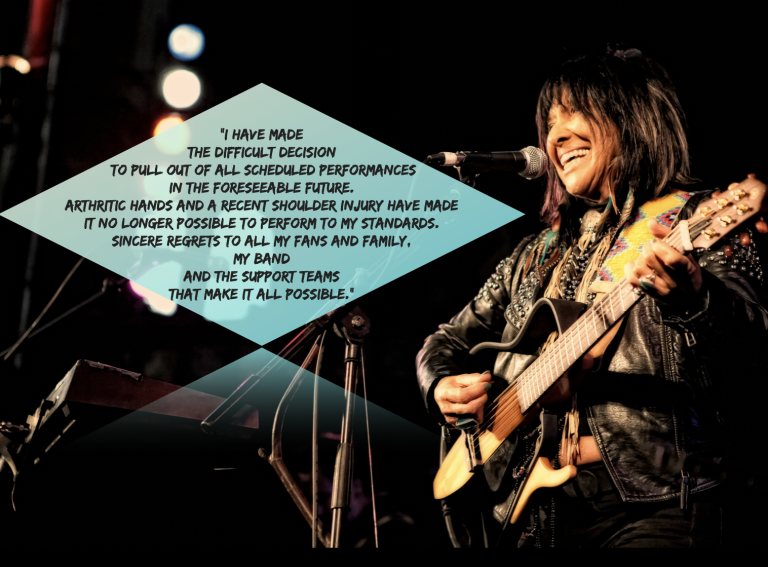
Her fall from grace was the steepest in a spate of similar contemporary scandals that became the source of embarrassment in the arts, academia, and justice, but the phenomenon is far from new. Almost a century ago, one of Canada’s most
celebrated conservationists was an upper-class Englishman named Archie Stanfeld Belaney who styled himself as Grey Owl.
There are similarities in the careers of Munro and Sainte-Marie: both were in
their respective spotlights for decades, and received dozens of international and
domestic awards and honours for their artistic achievements. Both their faces
have been featured on Canadian postage stamps.
Munro married twice, Sainte-Marie three times, and both were seen as women
who used their skill as wordsmiths to advance the cause of feminism. Buffy’s
Indigenous persona helped her achieve broader acclaim than Alice’s reputation
as one of the world’s most accomplished short story writers. Some 1.2 million
of Munro’s books have been sold worldwide, and an estimated 26 million of
Sainte-Marie’s records.
One major difference is that Munro died in May 2024 at the age of 92, and the
notoriety associated with her daughter’s sexual abuse and her husband’s guilty
plea to the offence did not receive public attention during her lifetime.
Sainte-Marie, 84, is very much alive – likely in seclusion at her retreat in
Hawaii -- but announced her retirement from public performances about the
same time as a very public controversy erupted about the legitimacy of her
claim to Indigenous heritage. Her accusers – including some Massachusetts
family members – say her story about being adopted from a Cree mother in
Piapot First Nation in Saskatchewan is total fabrication.
Both women had problematic responses to the potentially damaging revelations
about their personal lives. When she first learned about her husband’s alleged
crime, Munro reportedly accused her daughter of lying. She remained with the
husband who confessed his crime until he died eight years later.
Sainte-Marie’s persistent response is that she has never been precisely certain
of her parentage, and threatened her New England family with legal action if
they continued their public criticisms of her claim to Indigeneity.
Munro stopped writing over a decade ago. Sainte-Marie was still doing concert
tours until her fall from grace. Recording artists ranging from Barbra Streisand
to Elvis Presley had recorded her songs, and her digital artworks have been
featured in prominent North American galleries. She launched two foundations
to encourage the participation of Native American youth in education.
The talents of Alice Munro and Buffy Sainte-Marie are not in doubt. They have
each bequeathed prodigious legacies to their respective devotees, who are now
debating how best to regard icons who some may feel have betrayed them.
Do we stop reading and teaching Alice Munro’s books, and singing Buffy
Sainte-Marie’s songs? Do we petition the institutions that heaped recognition
on them to rescind the honours?
Buffy was booted from the Order of Canada in January, 2025, and at least one
honourary university doctorate has been revoked. As yet there has been no
indication that Nobel Prize jurors wish to expunge Alice Munro’s name from
their records.

The issue of making clear distinctions between someone’s unquestionable
achievements and their perceived character flaws is never going to be easily
resolved, so long as human beings are involved.
Canadian schoolchildren are still being taught that John A. Macdonald is the
father of this country. He was an alcoholic involved in one of Canada’s most
notorious political scandals and who facilitated Indian Residential Schools. In
addition to citing his many shortcomings, historians also credit the first prime
minister with playing an integral role in unifying the disparate regions of a ten-
million-square-kilometre fledgling nation being carefully scrutinized by
American expansionists.
Do we tear down his statues and strip his name off public buildings?
It is foolhardy – and dangerous – to try and erase history. Many cultures have
proverbs warning that those who forget history are condemned to relive it. I
have yet to meet a residential school survivor who wanted the institution they
attended torn down; they don’t want Canadians of the future to know nothing
about their past.
In this binary black or white world, perhaps the problem with having heroes
isn’t the individuals themselves; maybe it’s how loudly we insist on singing
their praises.
-----------
Maurice Switzer is a citizen of the Michi Saagig of Alderville First Nation who
continues to listen to Buffy Sainte-Marie’s music and read Alice Munro’s prose.



Comments